Weight map
Locate balance, transfer, suspension, and the moments a body negotiates gravity.
Character Handle / Field School
Kirepaxo is an information-led field school for character animation and rigging: a place to observe intention, build handles that answer it, and refine the shot one decision at a time.
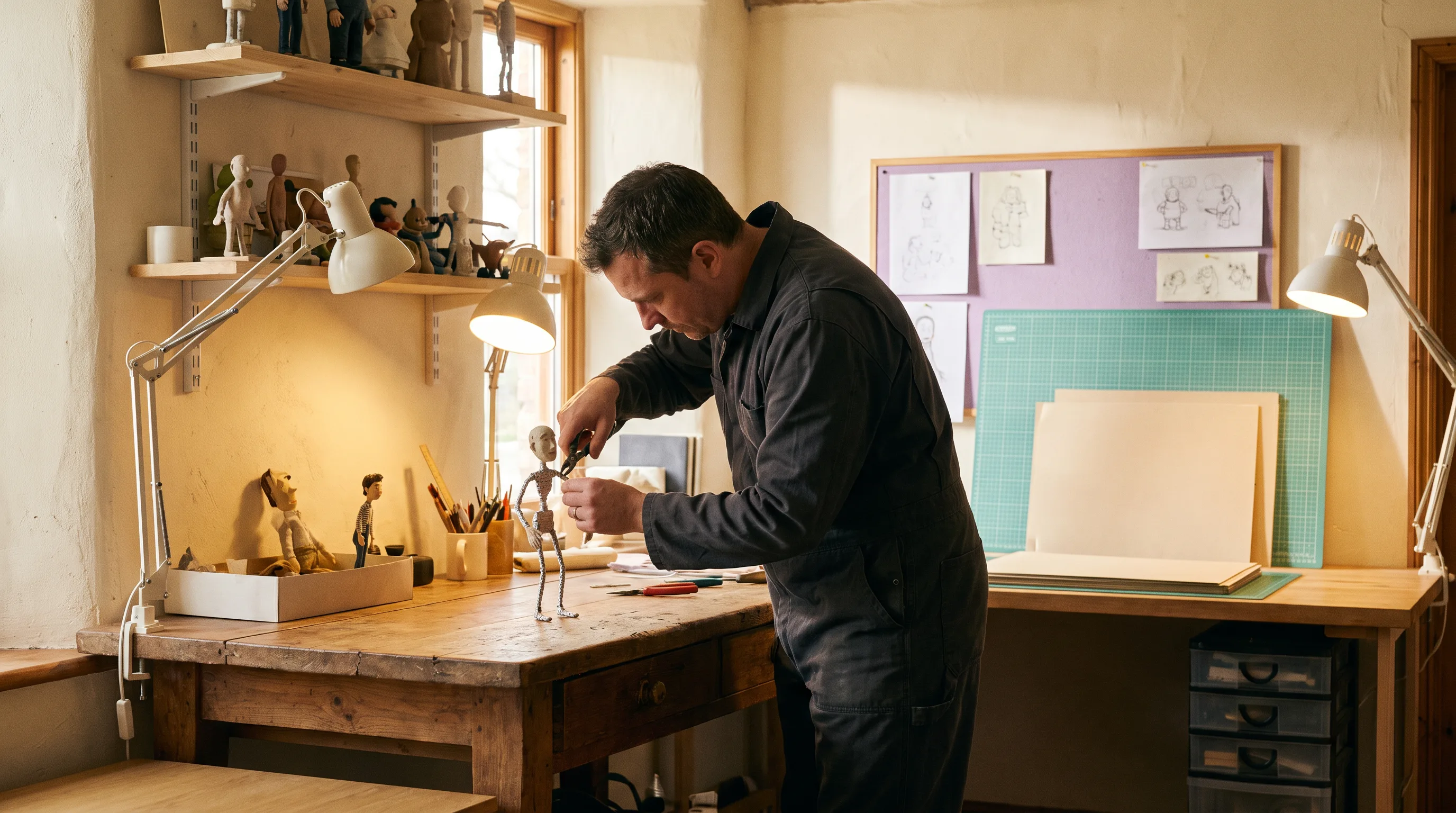
01 / Intent notebook
Before a rig becomes a list of controls, it can become a translation tool. These field notes keep physical options connected to observable acting choices.
Where does the pose gather effort: heel, shoulder, wrist, jaw, or breath?
Describe the shift in plain language before translating it into a control.
Mark the choice so another pass can challenge, preserve, or sharpen it.
Use playable verbs: brace, negotiate, conceal, lean, recover. A useful phrase is specific enough to alter timing and broad enough to invite several physical solutions.
Move one variable at a time. Change the contact point, then the delay, then the arc. If the purpose stays readable, the handle is doing useful work.
02 / Skeleton and control lesson stages
Each stage is a study lens rather than a finish line. Return to earlier stages whenever a later decision loses the character’s reason for moving.
Locate balance, transfer, suspension, and the moments a body negotiates gravity.
Map controls to intentions so a hand-off between keys remains understandable.
Test reach, twist, compression, and recovery before a shot needs them urgently.
Place the system inside a simple action and ask what the audience can actually read.
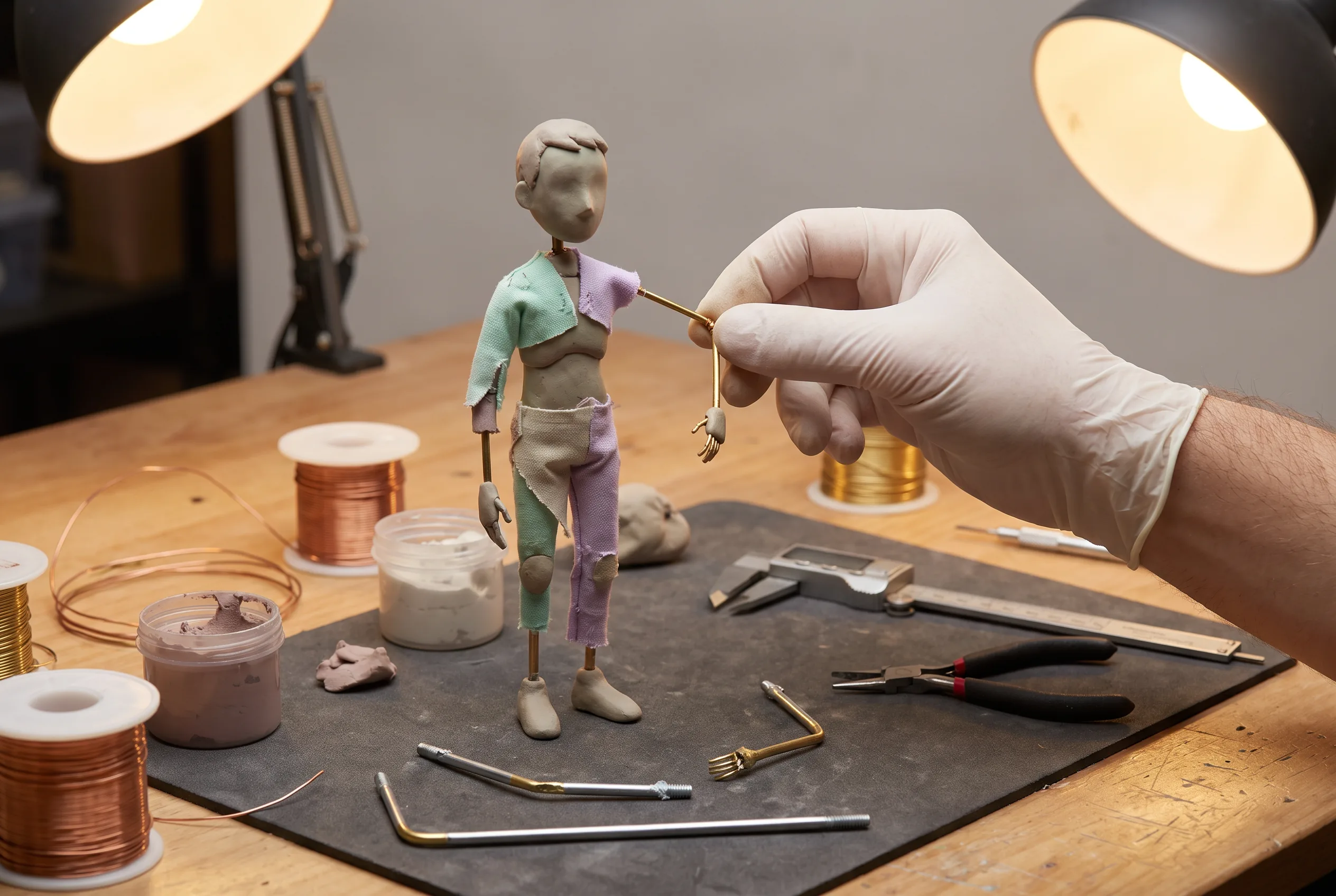 Joint response
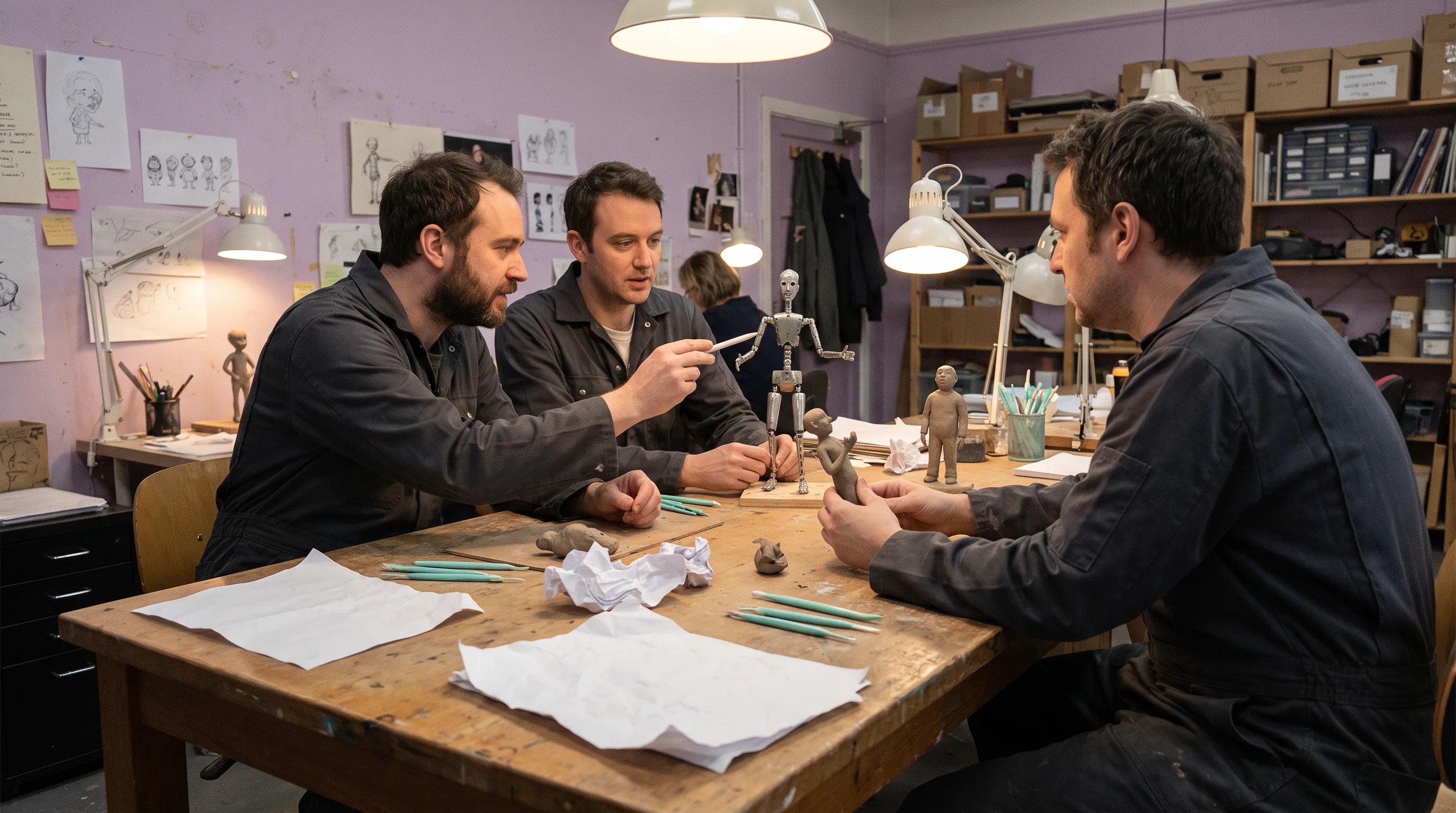 Shared reading
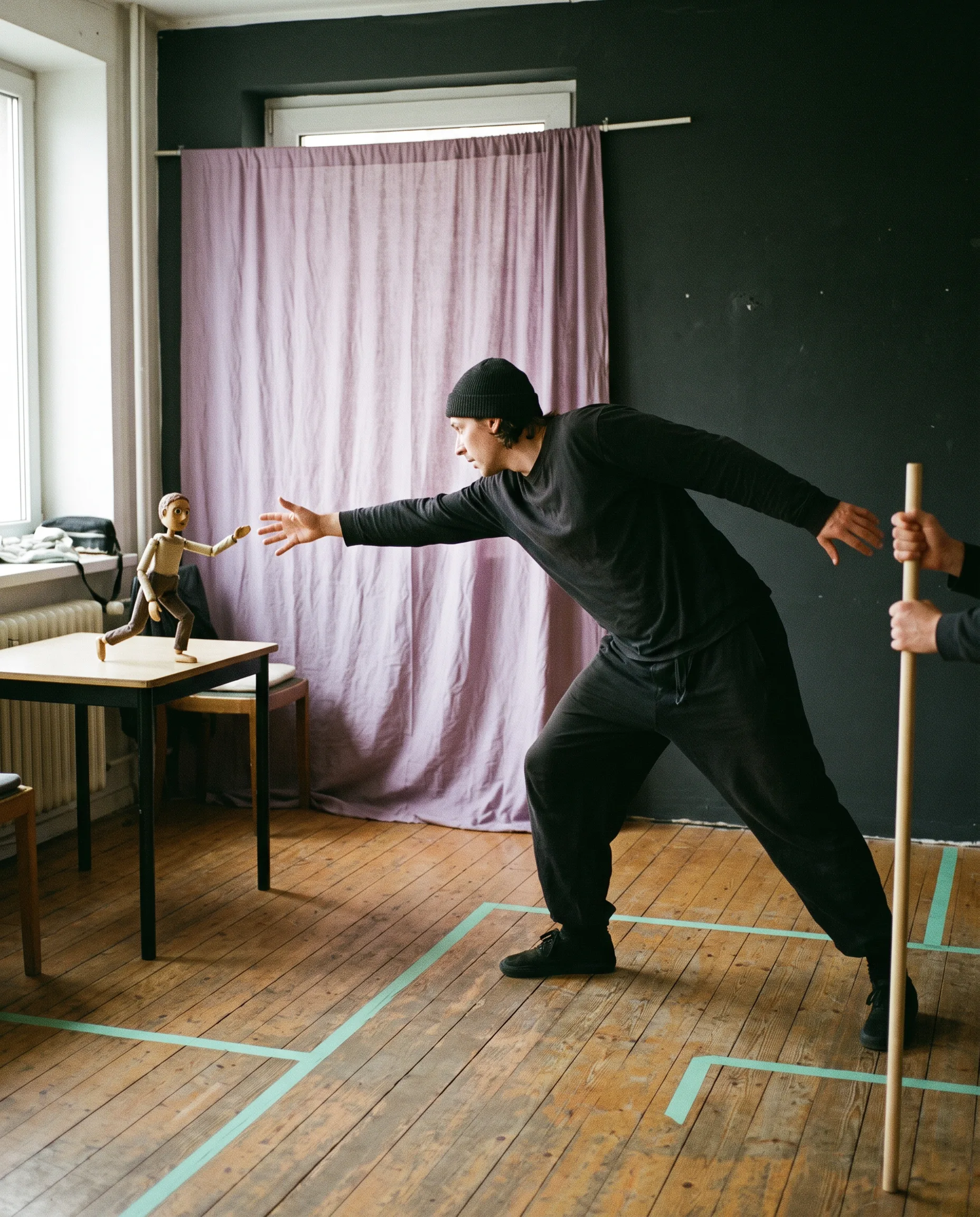 Reach and counterweight
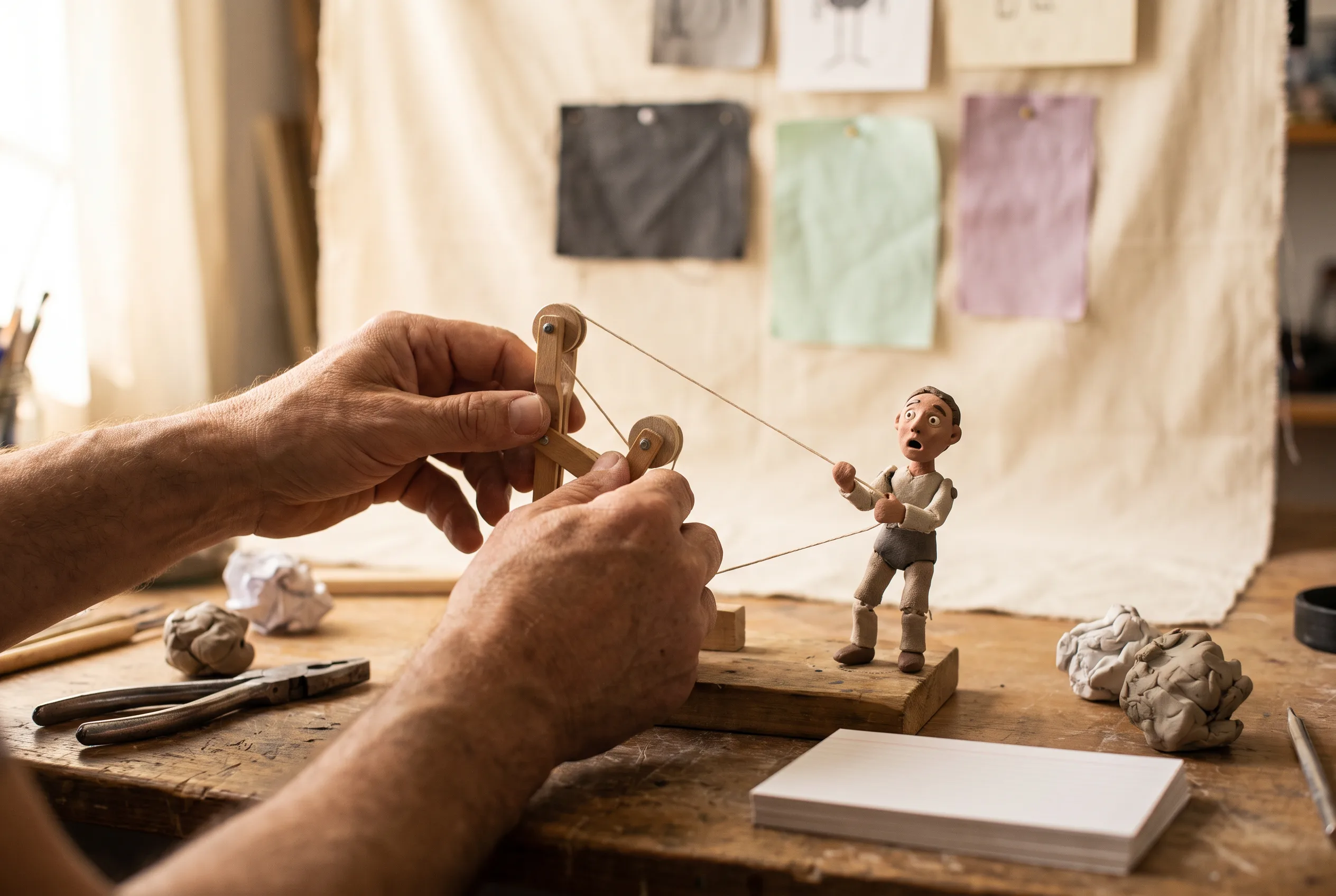 Cause and effect
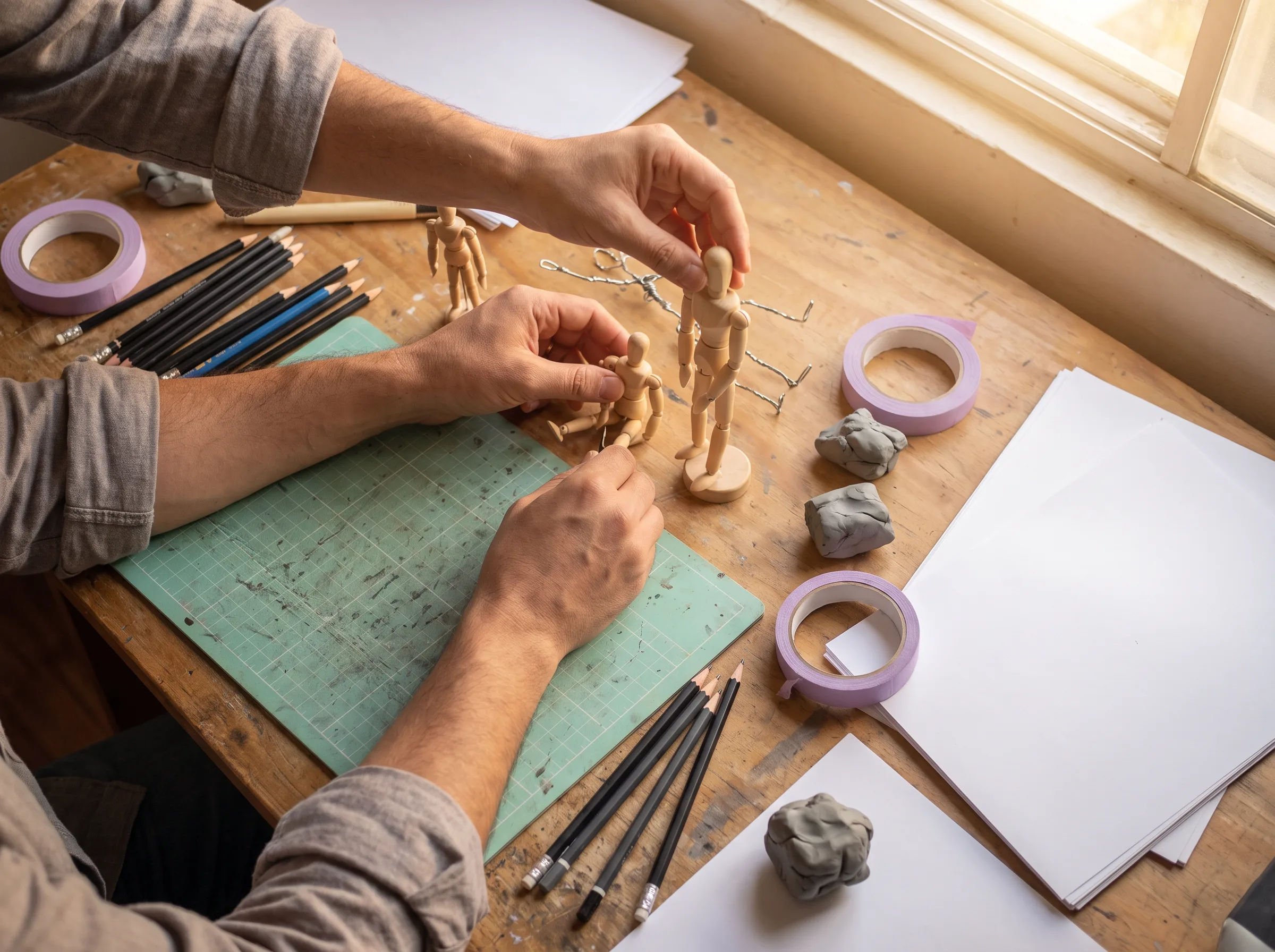 Pose family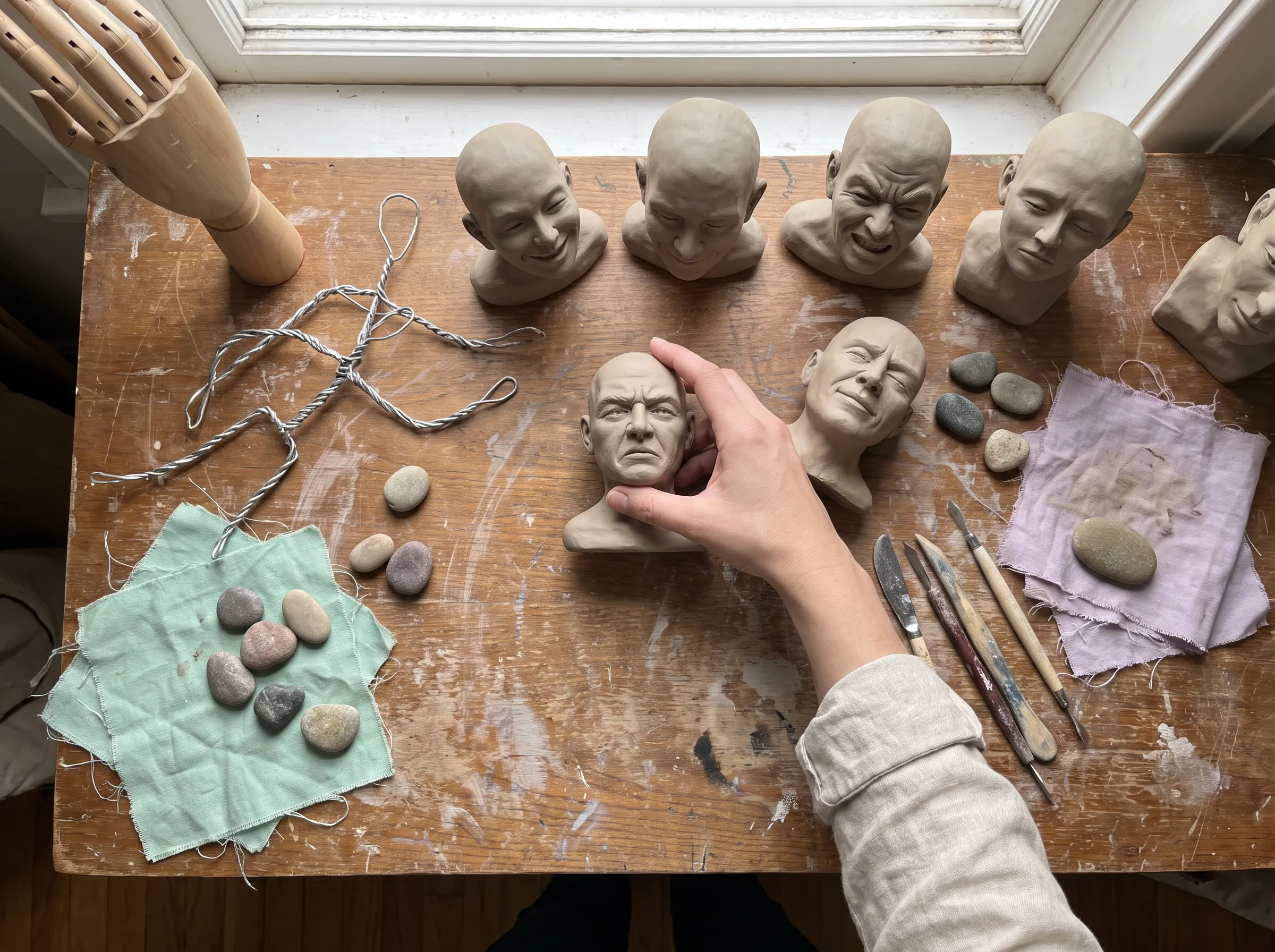
04 / Facial acting desk
A face can lead, resist, arrive late, or reveal a thought after the body has already acted. Use small studies to separate those possibilities.
Choose the target, then observe whether the gaze settles, flicks away, or returns with a new thought.
Let the brow, mouth, and head carry different amounts of certainty rather than resolving every feature at once.
Give an expression time to register after the trigger. The pause may carry more story than the shape.
05 / Constraint troubleshooting map
Check the anchor space and its update order before correcting the apparent slide by hand.
Ask whether the range supports force and direction, or only makes the silhouette louder.
Compare which control owns the intention during the transition, not only which object is selected.
Build a short test action early enough that failure can inform the setup, not merely patch it.
06 / Shot polish archive
A polished pass becomes more useful when it leaves behind a readable reason for its choices.
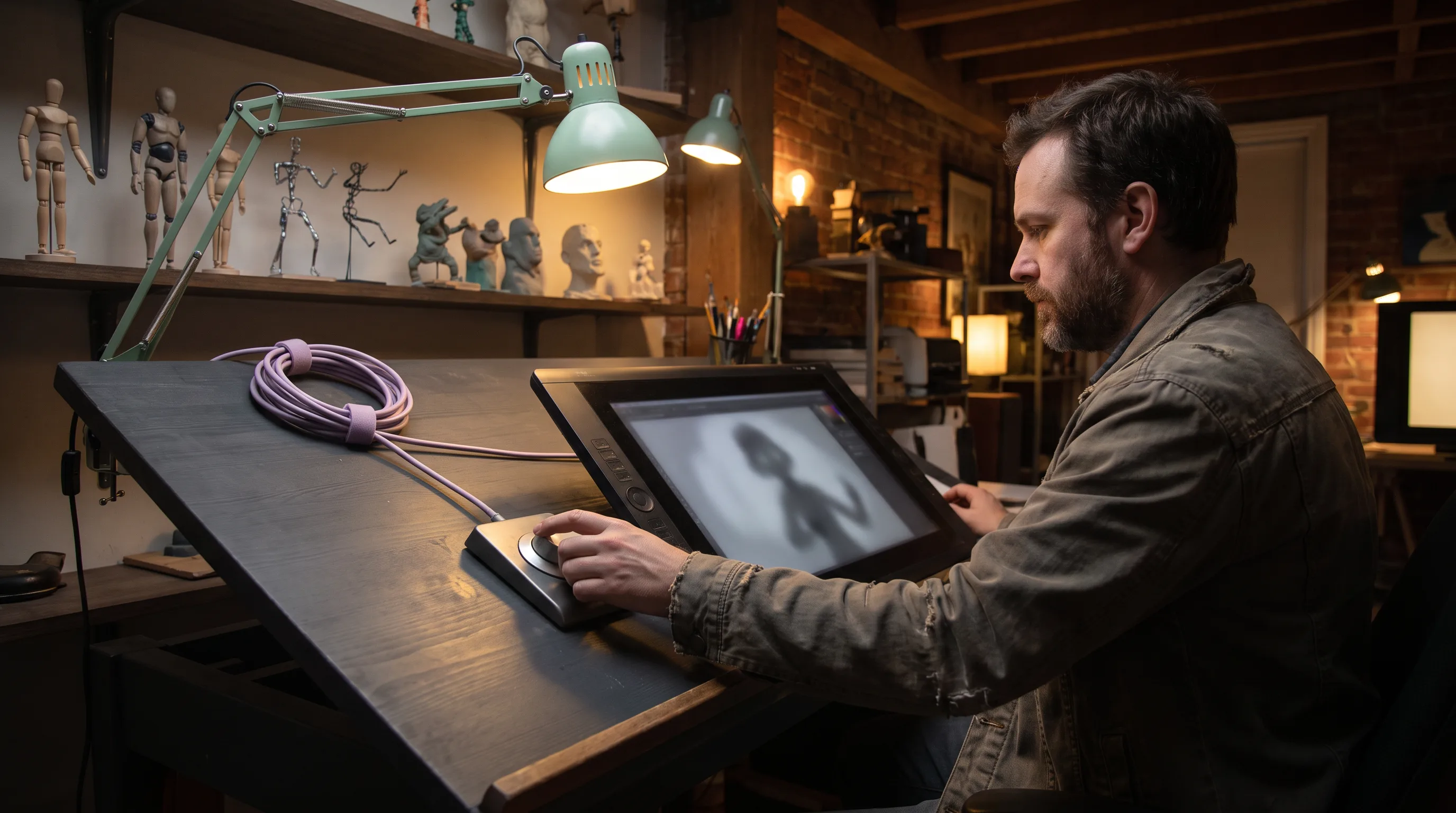
Compare the first contact against the character’s attention. A good arc cannot rescue an unclear motivation.

Review whether the viewer notices a mechanism, or simply understands an action moving through space.
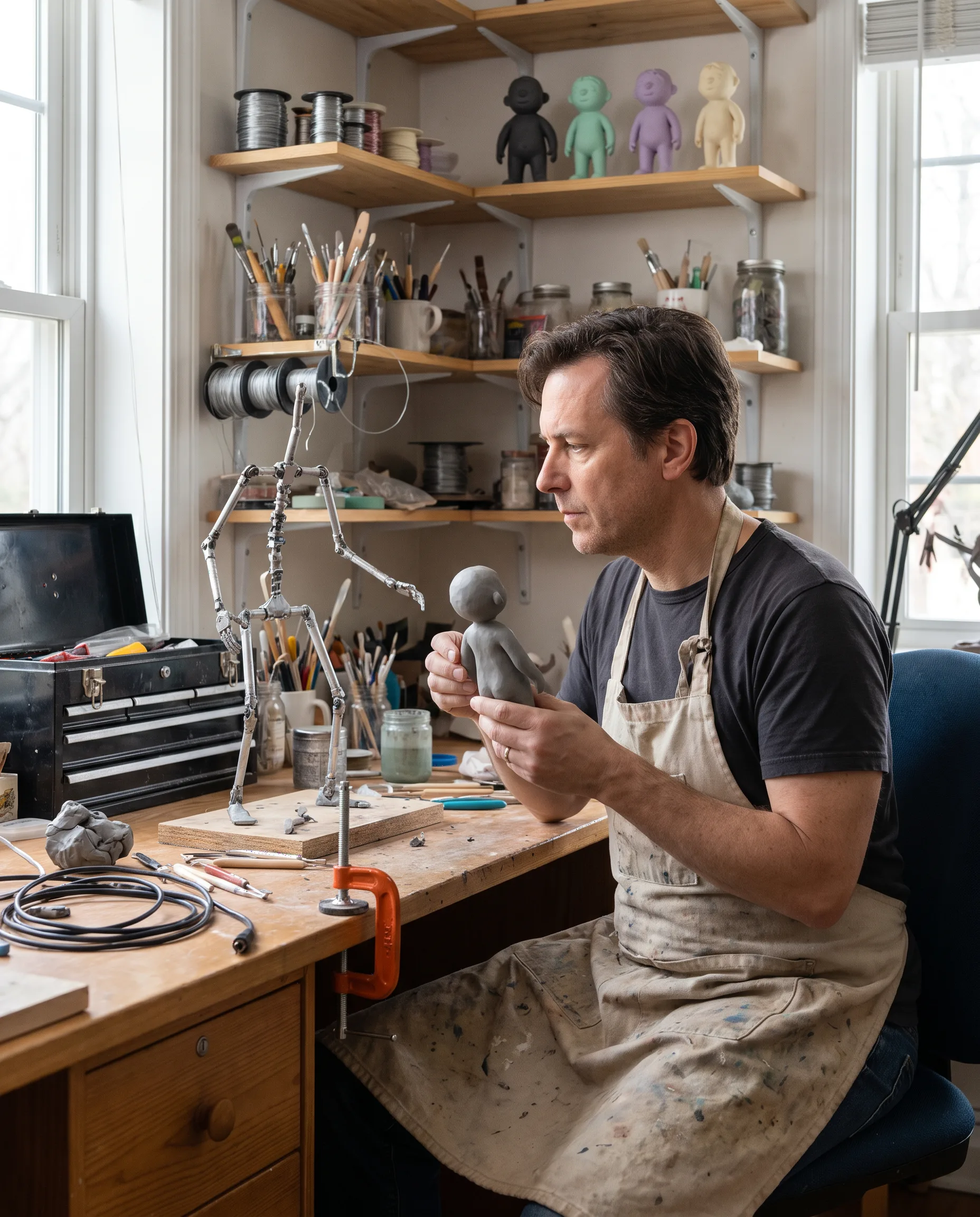
Strip back detail to find the decision the shot still needs to communicate.
07 / Weekly practice tracker
Use this local checklist as a gentle rehearsal board. It stays in your browser only; it is not an assessment and it does not send any data anywhere.
08 / Field FAQ
Kirepaxo is an informational resource. These answers describe ways to study the work, not a promise of a particular outcome.
Send a specific question09 / Contact the field desk
Tell us what you are observing or untangling. This form prepares an email draft in your own mail application; it does not send a message automatically.
[email protected]